Here’s the third of our series of blogposts by Mary Morrison in which she reflects on the Aire Air Sunnd project led by Comann Eachdraidh Uibhist a Tuath. As with her previous posts comments are welcome!
Mary writes:
Ar n-àite. What role can CEUT play in the current funding desert?
Latha math a h-uile duine.
A disclaimer. The ideas I will try to put down here are my own and are biased, so please do not take this rant as reflecting the CEUT Board’s thinking in any way.
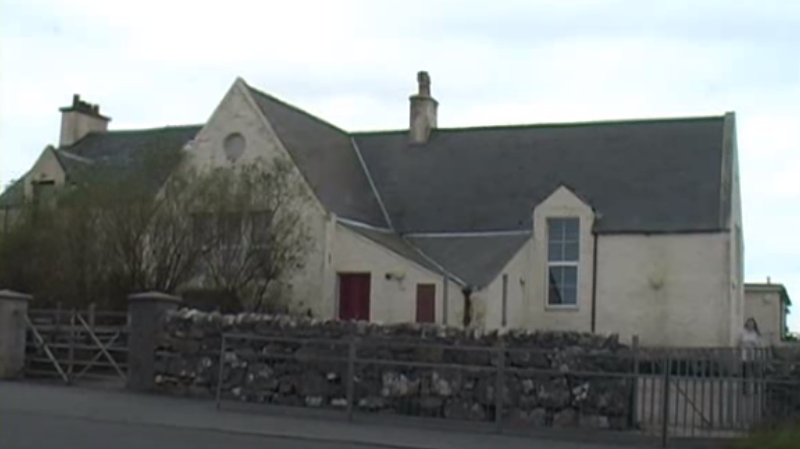
Why are some small charities on North Uist finding it so hard to get funding? Although the island has been gifted generously for the new pier and the promised ferry, our island infrastructure and offer to visitors sorely needs further support, if North Uist is not to remain a one-day wonder, to be travelled through, with visitors missing the many ways they might explore our unique heritage and environment. Are our several volunteer-run small, but excellent organisations to remain the Cinderellas at the ball? Comann Eachdraidh Uibhist a Tuath, despite our recent Levelling Up and Regeneration Fund setbacks, are more determined than ever to refurbish Sgoil Chàirinis and bring our collections home from Benbecula, however gradually!
CEUT’s vision for Sgoil Chàirinis is:
- A welcoming space anchored in the community to meet the needs of old, young and isolated alike.
- Learning from our heritage and island environment to move forward sustainably into the future using our tangible and intangible resources.
- Supporting the roots of Gaelic language and expression in a community with Gaelic at its heart.
Maybe one reason for our apparent invisibility on the funding scene could be that CEUT has not featured or been included in any of the more centralised and prestigious schemes such as the Islands Fund, or the Great Place Scheme? In turn, could this invisibility also be due to the centralised perceptions so apparent in the Scottish Government’s Culture Strategy, (2020)? In this document heritage briefly appears almost as an afterthought, as an extra, a bit player, on the stage of Art? It appears to recognise ‘each community’s own local culture in generating a distinct sense of place, identity and confidence’ and states, ‘place, -community, landscape, language and geography – is important and reflects the creativity of the past and provides inspiration for the cultural expression today’. This definition seems to downplay the powerful and active connections that the unique lived experiences of the past and their representations offer to our communal learning, resilience and ‘ways of being’ today.
According to more recent National Heritage Lottery Fund guidelines, their emphasis has now shifted: promote inclusion and involve a wider range of people (a mandatory outcome), boost the local economy, encourage skills development and job creation, support wellbeing, create better places to live, work and visit and improve the resilience of organisations working in heritage. The economic inferences here are clear.
Sgoil Chàirinis is perfectly positioned on the main road, a natural stopping off and resting place on the Hebridean Way, close to Teampull na Trìonaid, and a natural gateway to North Uist and its tangible and intangible riches. The school, familiar and treasured by so many local people, promises to be a very useful staging post, linking well with Taigh Chearsabhagh and our Museum there. (CEUT’s purchase of the school was as a result of a planned extension beside the Museum, for which we were given Regeneration funding in 2015, being turned down at the planning stage because of the increasing flood risk.)
We have been continuously supported through our travails by Museums Galleries Scotland as an Accredited Museum. We are very grateful to them for keeping us afloat, especially recently with their Resilience Funding, which has helped us to hang on by our fingernails to keep Sgoil Chàirinis. Miraculous really. MGS have also been central in funding our digital archiving work. The Association of Independent Museums have supported our important links with Barbados Museum by funding research and our teenagers’ films where Feasgar Diluain have recorded storytellers and their seanchas.
A major funder recently has been the British Science Association and the Wellcome Trust through the Ideas Fund. This Fund is breaking exciting new ground by encouraging researchers to work collaboratively with communities on wellbeing projects which equally benefit both organisations. Our aims, in looking at what research can bring to our practice, and analysing in what ways heritage promotes wellbeing are:
- Learn how our current wellbeing activities can be improved by working with health partners through heritage – Aberdeen University
- Discover how recent research into the community use of the Gaelic language can enrich our Gaelic activities – Language Sciences Institute, UHI
- Explore how digital activities can contribute to our local sense of place, value, identity, and wellbeing. St Andrews University, (Phase 1)
- Look at how the community can use these pilot studies to shape the development of Sgoil Chàrinis
In the New Year we are hoping to invite other small local charities to see what benefits we can all bring to each other by planning together how we can support each other, rather than by working in isolation. We are also planning to gather more evidence using the themes that emerged from our members’ survey this year, by holding a series of wellbeing reminiscence workshops, short interactive talks and open activities afternoons on Tuesdays, headed up and inspired by the very successful volunteer-led, monthly ‘Cupan’ sessions. Through February and March we will hold our family, pop-up Gaelic cafés on Saturday mornings, with a beginners’ table and other exciting Gaelic activities.
Ideas about who and what Museums were founded for are undergoing rapid changes – the premises on which the authoritative, ‘traditional’ museum, with its exhibits fossilised in glass cases within its walls, are being questioned. Re-interpretation of what kinds of sites these should become, how they can widen their inclusivity and operations within their local environment and beyond, becoming sites of ‘social conscience’ is foremost in these discussions. bell hooks – deliberately spelt lowercase – wrote that ‘to be truly free, we must dare to create lives of sustained, optimal wellbeing and joy’. Let’s go for it?