Today, April 20th, Gordon Wells moved on from his Projects Officer role with Sabhal Mòr Ostaig. This means that he will be withdrawing from his active co-ordinating function with the Guthan nan Eilean project and website. This does NOT mean that the project comes to an end. Rather, it means that the project moves even further along the route, mapped out for it some time ago, towards being a grassroots “bottom up” affair to which any and all community members are welcome to contribute their own materials.
Over the past few years it has been very encouraging to see many individuals trying out their hand with the “new media”, creating blogs, making their own audio and video recordings and so on. There have also been some interesting collaborations, with local groups like Stòras Uibhist and Comann Eachdraidh Uibhist a Tuath tackling bigger projects with some help from Island Voices where and when it was needed. Now that it has started, this kind of work will surely continue in one form or another, even without the active engagement of Sabhal Mòr Ostaig’s Projects Officer.
Although Gordon will no longer have the time for actively assisting with the creation of new materials, the intention is to keep the website “open for business” for other community members who have produced something they would like to share. If you feel you have a contribution to make and want to find out how, just phone or text 07879 644984, or e-mail gne@smo.uhi.ac.uk.
One thing the project has always tried to do is to build a stronger connection between the ordinarily bilingual people of these island communities and those with a professional interest in language teaching and/or research. Over the years we’ve been pleased to place occasional contributions from academics such as Professor Richard Johnstone, Professor Rob Dunbar, Dr Emily McEwan-Fujita, and others, alongside those of local community members. And we have maintained a dedicated page for research and reports, with summaries for Am Pàipear readers where possible. Gordon is now moving on to work with Soillse, the inter-university Gaelic research project, but will keep a keen interest in the Guthan nan Eilean website. Perhaps we can look forward to the research interest continuing to complement and support the ongoing creative outputs of “ordinary” Island Voices!
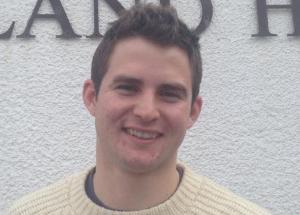
Liam Alastair Crouse has recently arrived in Uist to take up employment with Ceòlas as Gaelic Development Officer. Here he talks to Gordon Wells in Gaelic about his Rhode Island background and his interests in Gaelic and Archaeology. He then goes on to explain a bit about his job and what his hopes are for it.
He is keen to meet and talk to anyone in the community with an interest in Gaelic. He gives his e-mail contact details at the end of the interview.
You can also read more about his posting on the Ceòlas website here.
Mar a chluinneas sibh, tha Gàidhlig mhath aige. Gur math a thèid leis!
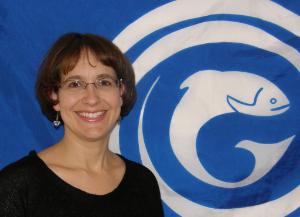
Dr Emily McEwan-Fujita conducted a large part of her PhD fieldwork in Uist in 1999/2000, and went on to complete her doctorate in Anthropology with the University of Chicago.
Since then she has published numerous articles on the subject of Gaelic and its revitalisation both in Scotland and Nova Scotia, where she now lives. Most recently she has become an active blogger. She wrote an interesting piece last month on Gaelic revitalisation and rocket science.
Here Emily talks (in Gaelic) about some of her observations on learning Gaelic in Uist, and how she came to write her piece:
Good to hear a new voice on Guthan nan Eilean!
And, with her kind permission, here’s the piece itself, “re-blogged”:
Saving Gaelic – Is It Rocket Science?
A few years ago, someone criticized my work, saying that Gaelic language revitalization wasn’t rocket science. I didn’t know whether to laugh or cry, because she was right. Language revitalization isn’t rocket science — it’s far more difficult.
Rocket science, or any type of engineering, formulates and solves problems. Get the math right, solve the problem. On to the next problem. Something breaks or goes wrong? Find the math or programming mistake and fix it. Human error is a factor, but the math is reliable.
Language revitalization, on the other hand, is not so simple.
A formal definition of language revitalization is: “the attempt to add new linguistic forms or social functions to a language which is threatened with language loss or death, with the aim of increasing its uses and users” (Kendall King 2001, p. 4). Basically, it’s the effort to save a language that is gradually going out of daily use.
Why is it so difficult to save a language? Because it involves a deliberate effort to change people’s opinions, ideas, feelings, and behaviors… Read more…
 Today, April 20th, Gordon Wells moved on from his Projects Officer role with Sabhal Mòr Ostaig. This means that he will be withdrawing from his active co-ordinating function with the Guthan nan Eilean project and website. This does NOT mean that the project comes to an end. Rather, it means that the project moves even further along the route, mapped out for it some time ago, towards being a grassroots “bottom up” affair to which any and all community members are welcome to contribute their own materials.