“Christmas Traditions in Malta” is a new and seasonal contribution by Sharon Pisani, from the St Andrews University Open Virtual Worlds group, to the Island Voices “Extensions” initiative!
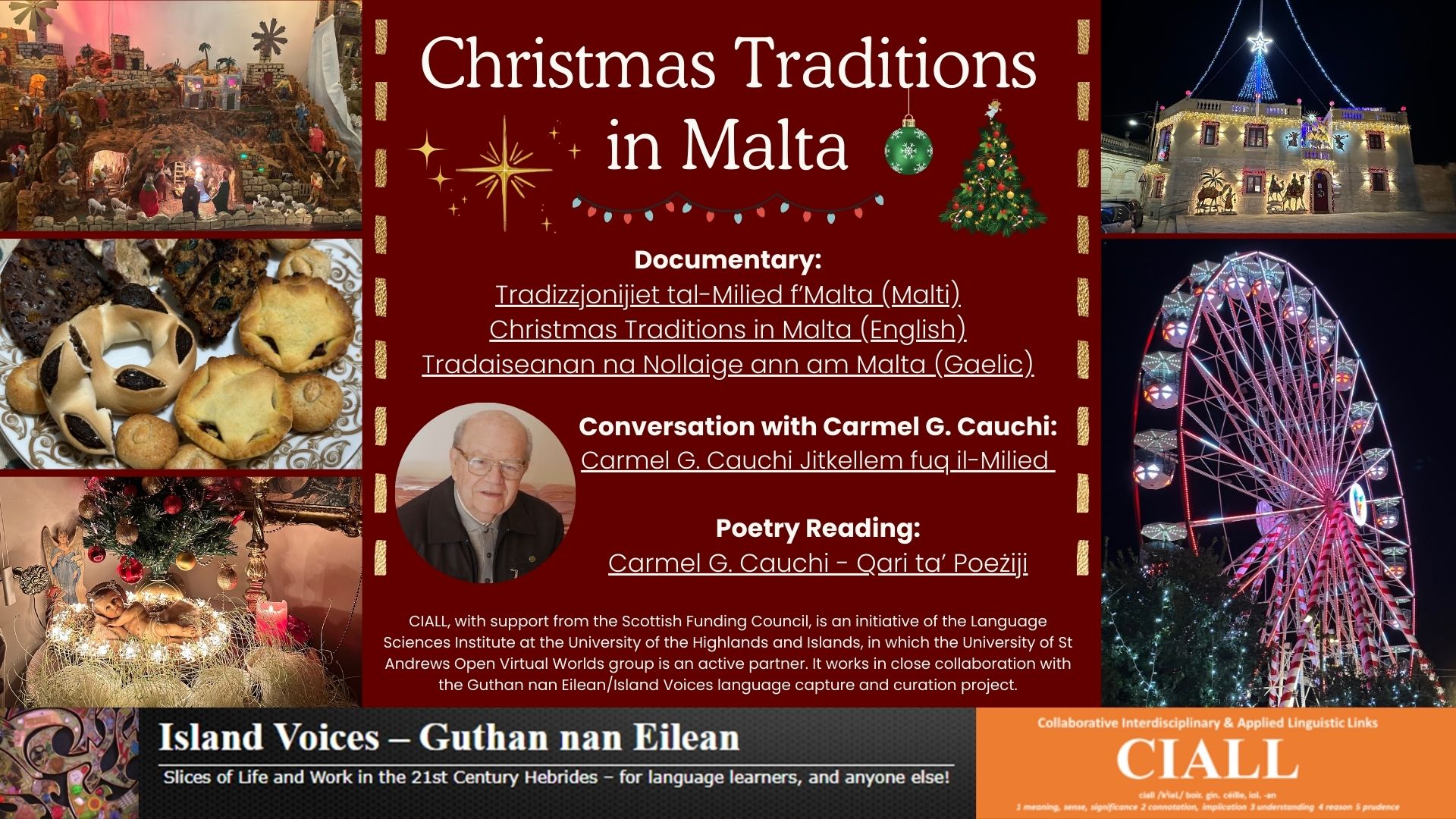 Select any video clip in this landscape format, or use the phone-friendly portrait layout.
“Il-Milied f’Malta huwa ċelebrazzjoni kbira, b’tradizzjonijiet antiki u oħrajn ġodda. Minn drawwiet reliġjużi sa ikel u xorb, insibu ħafna affarijiet li jagħqdu lill-poplu. Ara dan id-dokumentarju qasir biex issir taf iktar fuq il-Milied f’Malta.” (Christmas in Malta is a major celebration, with old and new traditions. From religious customs to food and drink, there are many things that bring people together. Watch this short documentary to learn more.)
Sharon writes:
“Christmas is a celebration that holds a special place in my heart. Since moving from Malta to Scotland, I’ve sought to bring the light and joy of Maltese traditions into Scotland’s short, dark December days. When I was back home planning and filming the documentary, I looked into Malta’s unique customs and discovered others that have faded over time, such as the use of capon as the traditional Christmas lunch meat. My goal was to capture the essence of the Christmasses I cherish —through food, decorations, and the sense of community.
In today’s era of content creation, documenting this felt natural, but it was also deeply meaningful to explore Malta’s festive roots and to interview Carmel Cauchi, an author whose books shaped my childhood. The poetry readings selected by Cauchi reflect a contemporary world, where harsh realities co-exist with the jovial celebrations of Christmas. Just as Christmas traditions and lifestyles evolve, so too does language and the way we produce and consume content in that language. This is especially true for Maltese – and other island languages – in this digital age.
I hope this collection of videos, which can be explored in Maltese, English, and Gaelic, alongside other languages through YouTube’s translation tools, resonates with you.”
Sharon had already given us a Maltese version of our St Kilda film, but we’re delighted to add this new cluster of videos in the new Extensions style, featuring natural unscripted speech and carefully crafted verse from the poet Carmel Cauchi alongside Sharon’s documentary narrative – which, of course, allows ready translation into other languages, such as English or Gaelic, and maybe more to come(?). The videos are subtitled on YouTube in their original language – which also enables auto-translation into a wide range of other languages through the settings wheel. To access any of these videos just click on the live links in either of these landscape or portrait formats.
As an added bonus, we’ve also been able to create three new Clilstore units in Maltese, so you can read the transcript while watching the embedded video and just click on any unfamiliar word to get a dictionary translation into the language of your choice. Christmas is coming early!
Documentary: Tradizzjonijiet tal-Milied f’Malta
Poetry: Carmel G. Cauchi – Qari ta’ Poeżiji
Conversation: Carmel G. Cauchi Jitkellem fuq il-Milied
The Island Voices Extensions initiative is supported by the CIALL project.