Academic Workshop
Professor Carl Griffin - Reading resistances in the archive: agency, intention, interpretation
Thursday 18 May, 11.30-14.00
Riots attract attention - and make good copy. But there might be compelling reasons as to why they were never recorded, and no less complex reasons as to why they might be written in a certain way that acted to obscure cause and intention. For less muscular forms of resistance, the issues of engaging in an intellectual archaeology of protest are even more acute. In the words of James Scott, ‘everyday forms of resistance make no headlines’ (1985, 36), actions such as feigned deference or foot-dragging perhaps impossible to excavate. How, then, might we combine the archive – the record of what we have as opposed to what we would like to have – and the historian’s art (and imagination) to write meaningful (and useful) histories of resistance? This workshop suggests, and seeks to find, some ways forward through the interpretation of archival texts and a discussion of approaches and methods.
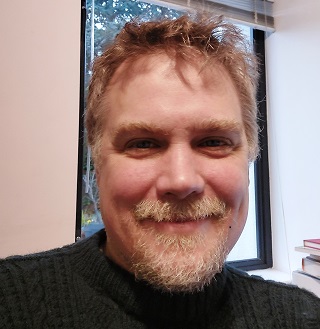
Professor Carl Griffin
Professor Carl Griffin is a Visiting Professor at the UHI Centre for History and Professor of Historical Geography at the University of Sussex. He is a historical geographer by training and a historian by inclination. He is first and foremost a scholar of our rural pasts. Inspired by ‘from below’ methodologies and politics, Prof Griffin's research is concerned with attempting to understand how the dislocations caused by rapid capitalist change on the eighteenth- and early nineteenth-century British countryside, socially, politically, and environmentally, impacted rural workers. He is best known for his work on popular protest but his research has also considered crime and criminality, changing human-animal and human-plant relations, forest history, and histories of political economy. Prof Griffin is currently working on a history of rural squatting that considers plebeian encroachments on commons and wastes that challenges dominant accounts of enclosure as always enacted by the (already) rich against the poor. A further longstanding project examines the environmental lives of rural workers, with work ongoing on labouring relations with the soil, in particular.
We invite staff and students to join us for this exciting opportunity. Attendance is possible either in person at the Burghfield Campus (Cnoc-An-Lobht, Dornoch IV25 3HN) or online via Cisco Webex.
Please have a read of our History Talks Live privacy notice, which covers this event, for further information.