International Medieval Congress 2023 - Review by Lucy Elmendorf
This was my first International Medieval Congress. It was recommended to me by Dr Linsey Hunter who said I would love it. She was right. It was slightly daunting going to the IMC having only just completed my undergraduate degree. Despite this, it was worth it. Listening and learning with other people on topics that I had only read about or heard of in passing was amazing. It allowed me to explore avenues of medieval history I had never considered before.
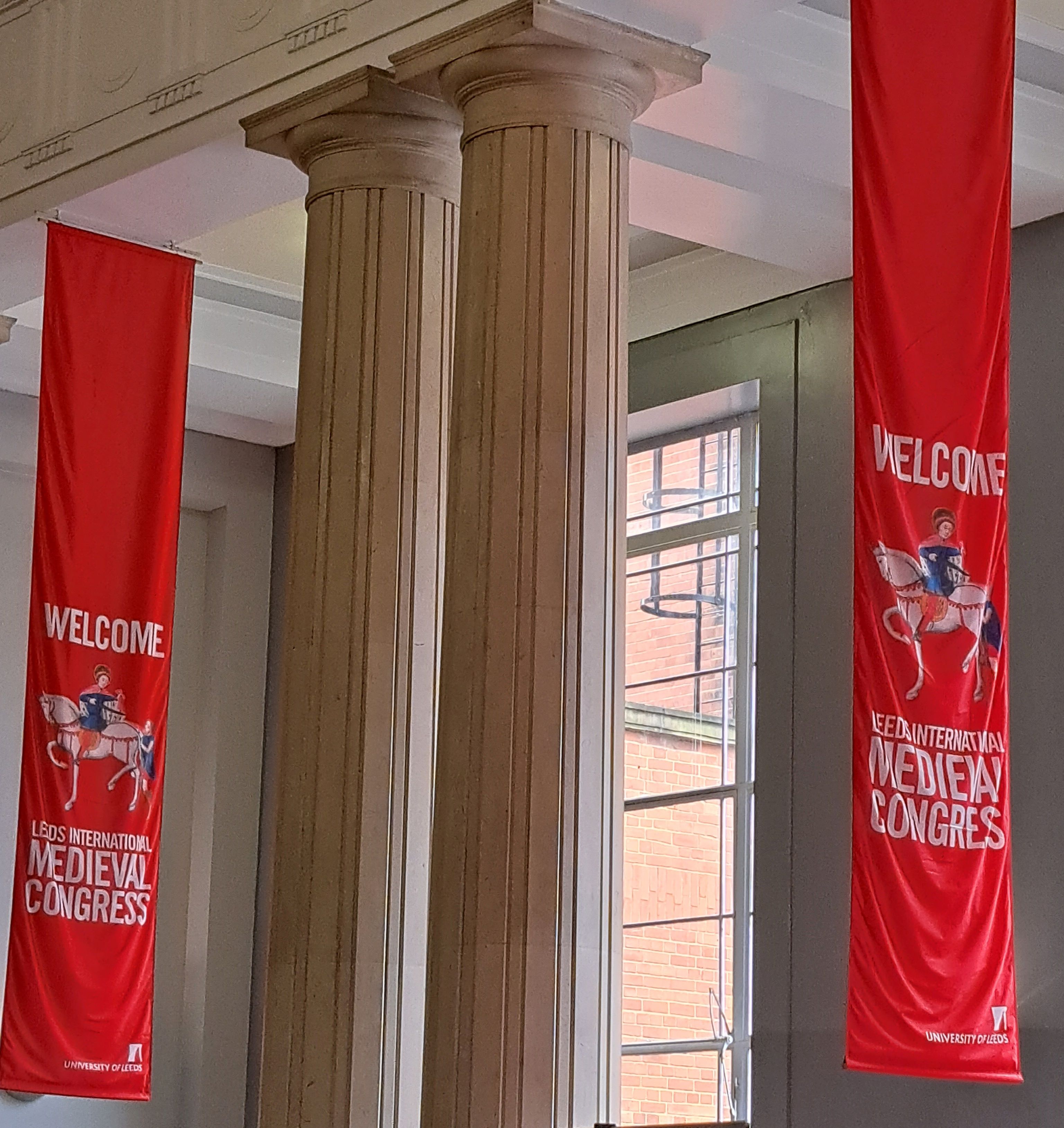
'Attending the IMC was genuinely the highlight of my summer. I was around like-minded people who were venturing off into their own little worlds of medieval history.'
One session that particularly resonated with me was 'The Network and Entanglements in the Cult of Saints'. The speakers - Lauren Whitman, John Eldevik, Yossi Maurey, and Samantha Kahn Henrick - all spoke to the same theme of entanglement, with each providing a unique insight into the grouping of saints, how medieval people interacted with saints’ miracles and hagiographic literature. This was of interest to my own studies, as I hope to specialise in the hagiographic literature of Saint Mary Magdalene. Going to this session gave an indication of the type of research I would be completing in my masters, whilst also suggesting useful researching techniques. These techniques, such as cross-referencing hagiographic texts between saint groups to see common themes, will be incredibly useful for my future studies. I would highly recommend any budding medievalist to attend the IMC, for this reason. It helps to indicate a good place to start from or continue onto when it comes to the beginning of your research.
Another session I attended was something I had not come across before. 'Faith, Theology, and Ideals of Living in the Late Roman Empire', with Matthew Baker and Cédrik Michel speaking, introduced a whole new world of theological texts. Not only was I able to sit and enjoy listening to these two speakers, but the questions asked by fellow audience members sparked different thoughts and questions of my own. Cédrik Michel's work on coding a natural language processor to see if Orosius and Augustine were plagiarising each other during the fifth century was fascinating. It was not a concept I had considered before: Late Antiquity plagiarism.
Whilst exploring new aspects of history and going to presentations that would help me in my own academic future, I was able to attend ‘hobby’ (for want of a better word) sessions. 'Warfare and the Church: Conceptions', was one of them. It was not only interesting and fast paced but genuinely fun. Alister Forbes, Joanna Mendyk, and Georgia M. C. Russell explored the many differing concepts of chivalry and how it translated into different regions of Europe between c.1000-1300. Understanding the Christian motivation for the promotion of chivalry from all different perspectives was incredible. Again, it was a presentation that encouraged collaborative engagement from the audience and speakers.
All presentations I attended were more relaxed than I expected. Speakers said that their research was not finished or what they were presenting was a rough idea of where they were headed. Speakers asked for help from audience members. You could really feel the sense of community among those who are studying the medieval world. Additionally, the presentations were not the only opportunity I had to connect with other medievalists. There were mixers happening every night. This was a great chance to talk to others who I may not have had the opportunity to speak with during their presentations. During these social hours I was able to finally meet one of my undergraduate lectures, Dr Lucy Dean. It was great to talk in person about each other’s research interests. She was also able to suggest what themes I should look out for when I begin my masters.
The IMC may seem daunting as a first timer. However, there is a great deal of support and there will always be someone to talk to. With the mixers, fairs, and presentations, you are never alone. Attending the IMC was genuinely the highlight of my summer. I was around like-minded people who were venturing off into their own little worlds of medieval history. I am thoroughly looking forward to attending next year, where the theme will be crisis, which is a state the medieval world was continuously in. Therefore, it will make for another fascinating week.