Μια ταινία μικρού μήκους για το κέντρο ημέρας Craigard στο Lochmaddy, στα Δυτικά Νησιά της Σκωτίας. Πρόκειται για ένα μέρος, όπου πολλά άτομα περνούν δημιουργικά και ευχάριστα το χρόνο τους.
Originally made in 2006, our Craigard documentary is now re-published with a commentary in Greek, as part of our “Other Tongues” initiative, in which our films are shared with other languages around the world. It’s a particular pleasure to see our first ever documentary, and still one of our favourites, brought back to life in this way!
As usual, a wordlinked Clilstore transcript – with the film embedded – is also available. You can find it here: https://multidict.net/cs/9062
Our narrator this time is Valentini Litsiou of C.V.T. Georgiki Anaptixi – an early partner with Sabhal Mòr Ostaig in one of the follow-up initiatives to the POOLS project out of which Island Voices/Guthan nan Eilean was born. So it seemed particularly appropriate to “go back to the beginning” when Valentini selected “Craigard” as the film she would like to translate and narrate.
Valentini still works for the same group, offering support in public relations, and has been involved in various other European projects. She’s always enjoyed this work because of the opportunities it’s offered to meet people of other cultures, who speak other languages, and who have other ways of thinking.
She has a wide range of domestic interests too, but is not enjoying this period of COVID-19 restrictions. Luckily for us, it didn’t stop her from making this excellent new contribution to Island Voices in double quick time! Perhaps the earlier experience of POOLS-related recording work made it an easy decision for her to get involved again?
Or maybe she’s just a natural star – witness her contributions in “Mi piace questo binario!”, also recently dusted off and re-presented…
Twitter hashtags do not normally attract much attention from Island Voices, far less participation or amplification. Firestorms and pile-ons are not our usual digital habitat. Our natural inclination is more towards common sense than confected indignation or online mass hysteria. But every now and then, one catches the eye – #GaelicMafia being a case in point. The phrase has been around for a long time, a dismissive and derogatory shorthand conveniently covering up the user-accuser’s unwillingness or inability to actually name any names in their imagined shadowy conspiracy of mad Gaelic zealots plotting the appropriation of rights and resources way beyond their proper station.
Well, it cropped up again recently, though perhaps without the effect the original twitterer intended, prompting an avalanche of ironic, sardonic, even scornful #GaelicMafia tweets in response. Of course, negative feelings towards Gaelic may spring from a range of sources in any individual’s mind, one of which is no doubt the monolingual’s understandable insecurity in the face of clearly communicative expression beyond their own comprehension. One “convenient” way of suppressing this fear is to let oneself believe that it’s actually the Gaelic speaker’s world view which is the defective one, reflecting a “narrow”, “inward-looking”, or “retrospective” mindset, by contrast with the modern and open outlook that the English language supposedly supremely affords in comparison with any other language in the world today – a view which conveniently neglects to acknowledge that every Gaelic speaker is bilingual, and so already possessed of all the advantages that English (or perhaps another language) can bestow, and plenty more besides.
It’s this additionality that balanced bilingualism, or indeed multilingualism, confers that Island Voices has been promoting from the start. A project founded upon transnational European co-operation is never going to accept a characterisation of its linguistic roots as somehow blinkered or introspective, or that it is motivated by selfish concerns for “cosa nostra” alone. Island Voices would not even have started, with its origins going back to the POOLS project of 2005-2007, without the support of European funding and partners from many different language backgrounds. We hope our response has been, and continues to be, appropriately reciprocal too, for example through our Other Tongues initiative – which actually extends way beyond European borders.
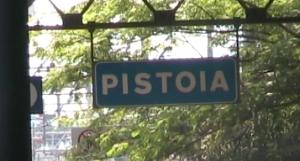
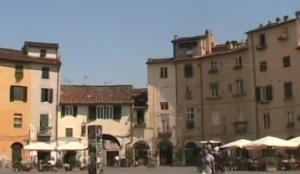
And so it is that an exception has been made, and we have allowed ourselves our own contribution to the hashtag of the day with a gentle reminder that other worlds beyond the English-only one continue to grow and develop. “Mi piace questo binario!” was first created about ten years ago, as an exercise in the POOLS-CX project – a rough and ready multilingual production, with English “flashcards” interspersed. Here it is again, this time with the English replaced by Gaelic. There cannot be any Gaelic Mafia without Guthan nan Eilean as a fully signed up member!
Prego!
Mary Robertson is another well-known Benbecula resident, here talking to fellow Baoghlach Archie Campbell for UHI’s Stòras Beò nan Gàidheal series of recordings capturing natural conversations between fluent Hebridean speakers of Gaelic.
In the first part, Mary talks about her family and her memories of her early schooldays in Torlum. Her father was a gamekeeper for the South Uist estate. Leaving home at 15 to get further training at Duncraig Castle was a shock. She describes the daily routine there. After that she worked in Edinburgh for two years before moving to Fort William to do hotel work, where she found more of an island community.
In the second part, Mary describes returning to Benbecula after losing her husband in an industrial accident, and the changes she noticed, particularly with the increased army presence and the work available through public schemes. She found work in the newly opened Sgoil Lìonacleit, where she continued till retirement. She is also involved with various charities and community groups, and her church involvement has entailed trips abroad to various countries. Her Gaelic interest also took her to Canada. She still dances and enjoys walking in various parts of the Highlands.
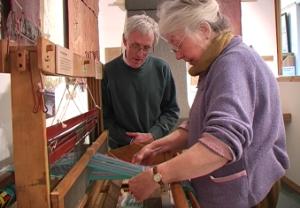 Μια ταινία μικρού μήκους για το κέντρο ημέρας Craigard στο Lochmaddy, στα Δυτικά Νησιά της Σκωτίας. Πρόκειται για ένα μέρος, όπου πολλά άτομα περνούν δημιουργικά και ευχάριστα το χρόνο τους.
 Valentini still works for the same group, offering support in public relations, and has been involved in various other European projects. She’s always enjoyed this work because of the opportunities it’s offered to meet people of other cultures, who speak other languages, and who have other ways of thinking.
 Twitter hashtags do not normally attract much attention from Island Voices, far less participation or amplification. Firestorms and pile-ons are not our usual digital habitat. Our natural inclination is more towards common sense than confected indignation or online mass hysteria. But every now and then, one catches the eye –
  It’s this additionality that balanced bilingualism, or indeed multilingualism, confers that Island Voices has been promoting from the start. A project founded upon transnational European co-operation is never going to accept a characterisation of its linguistic roots as somehow blinkered or introspective, or that it is motivated by selfish concerns for “cosa nostra” alone. Island Voices would not even have started, with its origins going back to the
 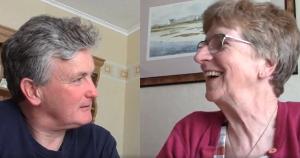 Mary Robertson is another well-known Benbecula resident, here talking to fellow Baoghlach Archie Campbell for UHI’s