UHI researchers join £2.7 million project to develop drought-resistant peatland moss
Researchers from the University of the Highlands and Islands (UHI) are taking part in a new £2.7 million project exploring how Sphagnum moss could be made more resilient to drought and changing weather patterns.
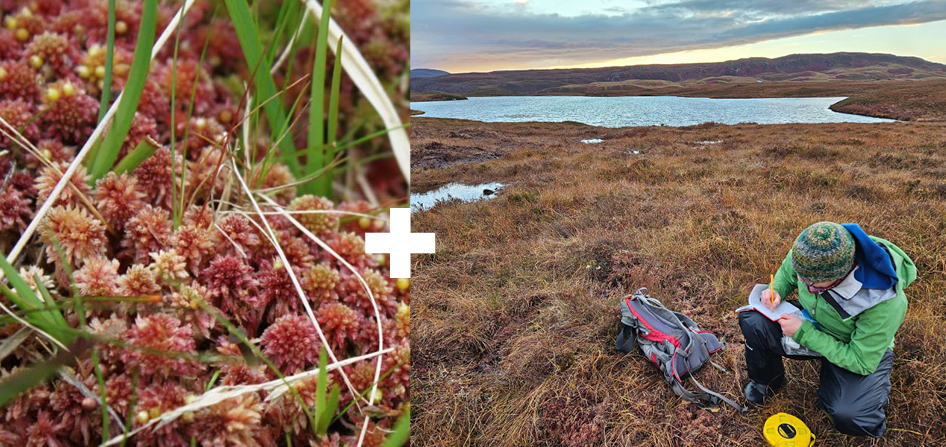
The two-year project, FutureMoss, led by the James Hutton Institute and funded by the Advanced Research and Innovation Agency (ARIA), also involves experts from UHI’s Environmental Research Institute, the UK Centre for Ecology and Hydrology (UKCEH) and the University of Dundee.
The project aims to develop new varieties of Sphagnum that are more resistant and resilient to drought which, it’s hoped, could help support the health of peatlands, which play an important role in carbon storage, biodiversity and water retention.
Sphagnum is particularly vulnerable to dry conditions because it has no roots or stomata, the tiny openings that help most plants regulate water loss, instead relying on its structure to hold water.
The research team will identify local populations of Sphagnum across the UK and Ireland that are naturally more resistant to drought, looking to understand what makes them more able to cope with dry conditions.
They will also develop methods for producing new drought-tolerant varieties of Sphagnum, including controlled breeding, which has not previously been established for the moss.
Dr Mascha Bischoff, Peatland Chemical Ecologist at UHI, said:
“Sphagnum mosses already show natural variations in how they respond to drought. FutureMoss will explore how we can use these differences to help peatlands adapt to climate change.”
Dr Tom Parker, an Upland Ecologist at the Hutton and leader of the FutureMoss project, added:
“The UK is experiencing increasingly severe drought events and peat mosses are on the front line. We need these mosses to underpin effective peatland function and aid with their restoration.
“In FutureMoss, we want to realise climate-resilient landscapes by boosting their genetic capacity to resist and bounce back from drought.”
Dr James Cash, an Atmospheric Scientist at UKCEH, said:
“By measuring the chemical cues released by mosses into the atmosphere during drought, we can identify the varieties most likely to thrive in a changing climate.”